Advanced Techniques

The unique features of DESIGN MASTER Color Sprays let you control the nuance of color. With these simple techniques it's easy to manipulate spray color into distinctive finishes. Most let you select hues of your choice to coordinate with your project's palette. Allow the color to dry between steps but, with our fast-drying sprays you'll have quick results. Protect your unique finish with any DESIGN MASTER Clear Coat Spray.

Water Resist Technique

Moisture prevents spray color from adhering to a surface. Using this principle, water droplets are misted onto the surface before spraying. A unique, small pattern, mottled finish is the result.

With a spray bottle mist any hard-surfaced item with water. Then randomly spray on a selected color and immediately dab away moisture with paper toweling. Different amounts of water will produce different effects. If desired, apply additional layers of different colors by repeating the three steps: mist, spray and dab.

Soaping Technique

Using the resistance principle of the Water Resist Technique, soap suds are used to create large irregular patterns.

Soak a sea sponge in a mixture of liquid detergent slightly diluted with water. Work up lots of suds in the sponge then dab suds all over a hard-surfaced item. Immediately spray a selected color over the suds, let set a few moments then wipe away the moisture with paper toweling to unveil a flowing organic pattern. If desired, spray several colors in the same manner to build layers of pattern.

Leather Technique

Design Master CHERRY WOODTONE unexpectedly unifies base colors in a rich amber glaze to fashion the look of top grain leather. Light-colored, non-porous, hard-surfaced items show off the leather graining of this technique the best.

Spraying very close to the surface, apply puddles of OCTOBER BROWN in random fashion. Dab the color with a crumpled wad of cellophane. This step creates the veining of the leather. Repeat the puddle and dab steps with both HUNTER GREEN and ORANGE. Do not overlap colors and be sure to leave some areas untreated. Let the color dry then apply a light even coat of CHERRY WOODTONE. If desired, apply a second coat.

Wiping Technique

This technique removes color to reveal underlying surface color and create distinct interest.

Spray a hard-surfaced item with a selected color spray and let dry. With a cloth or paper towel wrapped around your index finger, saturate the tip with FAUX SOLUTION or MESS MASTER. Rub the cloth over random areas of the surface to remove color. Re-moisten the cloth as needed to repeat the process over all desired areas. This method beautifully highlights relief patterns or can be used to create a chic distressed look on all sorts of items.

Masking Technique

The masking technique creates crisp edges of color for straight line effect. It's an easy way to make stylish stripes on a variety of items.

Design a pattern by laying masking tape over areas to be left unsprayed. Press edges of tape firmly to ensure adhesion. Apply light coats of color on the exposed areas. When the surface is dry remove the tape to expose the pattern. Other patterns can be created with removable labels and stickers.

Fusion Technique

Using the solvent properties of Design Master MESS MASTER or FAUX SOLUTION colors are fused together.

Protect work area with several of layers of newspaper. Spray selected Design Master colors over a hard-surfaced item in an overlapping random fashion. When almost dry, heavily spray MESS MASTER/FAUX SOLUTION over entire painted surface. The colors will soften and flow together creating a unique blended pattern. As the color flows down the surface, control any drips by applying more MESS MASTER/FAUX SOLUTION to the selected area and force the drip to dissipate. If too much color is being removed, simply apply more color then mist with solvent to blend. Be certain to apply this technique in a well-ventilated area. After completely dry, enrich the finished color with a Design Master clear coat spray.

Sponging Technique

Sponged patterns can be created with spray colors.

Closely spray selected color into a paper plate creating a puddle of color. With a sponge or a wad of paper towel or cellophane dab into the puddle then dab color onto surface.

Antiquing Technique

The quickest and easiest method to age any item.

Simply apply a light misting of PECAN or GLOSSY WOODTONE over an existing or painted surface.

Texture Technique

Disguise battered surfaces by applying texture before coloring.

Apply a coat of TACK 2000 Spray Adhesive to the surface. Allow adhesive to set then spray coats of selected color.

Water Bath Technique

Produces a curious marbling finish.

Spray selected color or colors into a bucket of water creating a film on top. Roll a hard-surfaced object across the film and watch it pick up the color in a most unusual fashion.

Stencil Technique

Various items such as masking tape, rubber cement, paper, cardboard, plastic, removable labels, leaves or any material that creates a barrier when sprayed can be used to create a reverse-stencil effect.

Tear an edge of paper or cardboard. Hold the torn pattern up to your object and mist toward the edge letting the spray fall onto the surface. Repeat this step with the pattern in different positions. Loose items for stenciling, such as leaves, lace, cutouts, etc., can be held to the surface with repositionable TACK 1000 Spray Adhesive.

Splattering Technique

Make irregular paint droplets with either of these two methods.

Hold can 18" from surface and apply quick bursts of spray while pushing the spray tip forward (vs. properly straight down). Or, dip a brush into a puddle of spray color and fan out loaded bristles to splatter paint on surface.

Faux Finishes

Try some of the featured techniques with defined color combinations to create a sampling of tried faux finishes.

Copper Verdigris

Basecoat the surface with Design Master COPPER. Let dry then layer FLAT BLACK, HUNTER GREEN and ROBIN'S EGG following the Water Resist Technique.

Raku Finish

Spray FLAT BLACK to basecoat the surface. Let dry. Using the Soaping Technique layer MINERAL BLUE, VIOLET, CARNATION RED, 24KT PURE GOLD and SUPER SILVER in the desired areas to highlight.

Floating Gold

Surface must be lying flat. Spray a very thick coat of DEEP BLUE. Immediately apply a heavy coat of MESS MASTER or FAUX SOLUTION to keep the Deep Blue paint soft. Immediately spray with close bursts of Gold Medal. The Mess Master pulls the Gold Medal apart, spreading the color out. Let thoroughly dry. Other base coat colors can be substituted as well as Super Silver as the metallic hue.

Tortoise Shell

Apply a basecoat of TERRA ROSA. Stencil the surface with a ragged edge as described in the Stencil Technique using FLAT BLACK and alternating the stencil over the entire area. Mist with several coats of GLOSSY WOODTONE to blend the colors together and decrease the contrast between them.

Green Serpentine Marble

Basecoat the surface with HUNTER GREEN. Use a natural or torn sponge to lightly dab FLAT WHITE and FLAT BLACK on the surface. Spray puddles of DEEP BLUE, PURPLE, HUNTER GREEN and FLAT WHITE on a paper plate and use a sponge to randomly and lightly dab onto the surface. Add irregular veining by dipping the edge of a feather in a puddle of FLAT BLACK and FLAT WHITE and dragging it across the surface.

Maple Leaf Stenciling

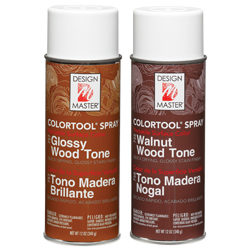
Apply a basecoat of Brilliant Gold. Spray the backside of assorted maple leaves with TACK 1000 Spray Adhesive. Lightly adhere the leaves on the surface. Mist around the leaves with GLOSSY WOODTONE. Reposition leaves and mist with CHERRY WOODTOONE. Reposition leaves again and mist with WALNUT WOODTONE. Dip a small paint brush in WALNUT WOODTONE and splatter across entire surface.

Advanced Search

Newest Projects

Project Finder

Our source of inspiration and projects continues to grow. Search for ideas using any of these methods.

Test